Athlete attendance tracking software that saves time
A practice starts in 10 minutes, but the coach is still checking text messages, looking at a handwritten sign-in sheet, and trying to work out whether enough athletes will be there for small-sided drills. That is the everyday problem athlete attendance tracking software is built to solve. It gives clubs a reliable view of who is coming, who is absent, and where attendance patterns need attention - before a session begins.
For a small or mid-sized club, attendance is not just an administrative detail. It affects coaching plans, facility costs, team communication, athlete development, and parent confidence. The right system should make this information easier to collect and more useful to act on, without creating another complicated tool for staff to manage.
Why attendance records matter beyond the sign-in sheet
A paper register can confirm who showed up. It rarely helps a club understand what that information means. When attendance lives in scattered notebooks, spreadsheets, and message threads, staff spend time chasing answers instead of preparing athletes for a productive session.
Consistent attendance data helps coaches see whether an athlete is building the training habits needed to improve. It helps coordinators spot sessions with recurring low turnout and adjust schedules, communication, or capacity. It also gives club leaders a clearer picture of how often members are using the programs they pay for.
The goal is not to turn every practice into a compliance exercise. Athletes miss training for valid reasons: school events, family commitments, illness, travel, and recovery all happen. The value comes from having accurate context rather than relying on memory when a pattern starts to emerge.
What athlete attendance tracking software should do
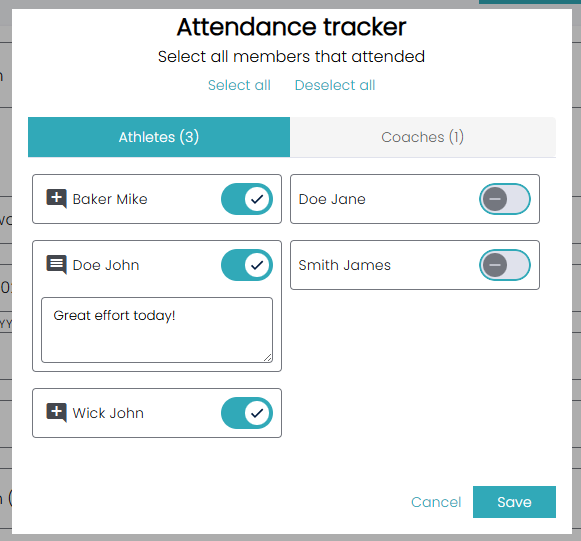
The best attendance tools fit into the way a club already runs training. Coaches should be able to open a scheduled session, see the expected roster, and record attendance in a few moments. Athletes or parents should have a clear way to confirm availability when the club needs advance numbers.
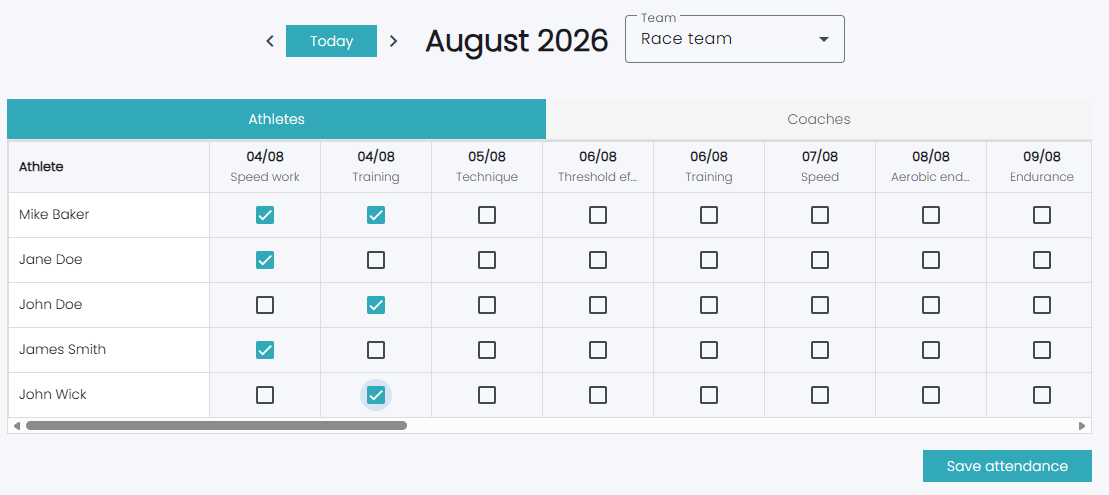
At a minimum, athlete attendance tracking software should connect attendance to the club calendar and team roster. Staff should not have to rebuild a list of athletes for every practice or manually copy data into a report at the end of the month. When schedules, teams, and member records work together, each update carries less administrative work.
Attendance status needs to be clear
Present, absent, late, excused, and injured are often enough for most clubs. The exact categories depend on the sport and the club's policies, but they should be simple enough that coaches use them consistently.
Too many status options create hesitation at the field or gym. Too few make the record unhelpful. For example, marking an athlete as absent when they are following a medical recovery plan can distort a coach's view of engagement. A practical system lets the club keep categories meaningful without turning each check-in into a long form.
Mobile-friendly access is a real requirement
Attendance is usually taken near a court, field, pool, or track - not at a desk. Coaches need a system that is easy to use from a phone, tablet, or laptop. If recording attendance takes several screens, requires a special device, or depends on reliable office Wi-Fi, staff will return to paper when training gets busy.
That does not mean every club needs QR codes, kiosk hardware, or biometric check-in. Those options can be useful for high-volume facilities, but they can add cost and complexity. For many youth and community clubs, a quick coach-led check-in tied to the session roster is more dependable.
Reports should answer practical questions
A useful report does more than show a percentage next to each athlete's name. It should help staff answer questions such as: Which athletes have missed several recent sessions? Which teams have the strongest turnout? Are certain days or times consistently difficult for families? Is a new training program being used as expected?
Reporting is most helpful when it supports a conversation or a decision. A coach may reach out to an athlete whose attendance has changed suddenly. A coordinator may move a poorly attended session to a different time. A club president may use participation trends to plan next season's facility needs.
Build attendance into the club workflow
Software works best when the process behind it is clear. Before introducing a new attendance process, decide who records attendance, when it should be completed, and what happens when an athlete is absent.
For many clubs, the simplest approach is for the coach or team manager to take attendance at the start of each scheduled session. If athletes need to notify the club in advance, they can update their availability before practice. Staff then begin with an expected attendance list instead of guessing from last-minute messages.
Keep the policy fair and easy to explain. Families should know whether they need to report absences, how far in advance they should do so, and whom to contact for longer absences. Coaches should know when an attendance pattern needs a supportive check-in and when no follow-up is needed.
The data itself is only one part of the process. A missed practice is not automatically a motivation problem. Younger athletes depend on parents for transportation. Older athletes may be balancing school, work, and other commitments. Use records to notice patterns, then ask questions before making assumptions.
Choose software that reduces duplicate work
A standalone attendance app may look affordable at first, but it can create extra work if it does not connect with registration, scheduling, communication, and team management. Staff may end up maintaining the same athlete details in several places and correcting inconsistencies whenever a roster changes.
An all-in-one club management platform gives attendance more context. When an athlete registers, joins a team, or changes contact details, that information can flow into the schedule and session roster. When a training session is canceled, the attendance record is not left looking like every athlete skipped practice. When staff need to communicate a change, they can work from the same club information instead of exporting lists between tools.
Clubs Craft is designed around this kind of connected workflow, bringing scheduling, athlete records, team management, communication, reporting, and club administration into one place. For clubs that are tired of moving between spreadsheets and separate apps, that can mean less time maintaining records and more time supporting athletes.
Price structure also matters. Some platforms charge separately for reporting, communications, extra staff accounts, or larger athlete databases. A club should know what is included before building its processes around a system. Predictable pricing is especially valuable when enrollment changes from season to season.
Questions to ask before you commit
Start with the people who will use the system most often. Coaches need speed at practice. Administrators need accurate records and easy reporting. Parents and athletes need clear communication without unnecessary steps. If one group has to work around the software, adoption will suffer.
Ask a provider to show how it handles a real club scenario: a new athlete joins midseason, a practice is rescheduled because of weather, an athlete reports an injury, and a coach wants to review the past six weeks of attendance. A polished demo is less useful than seeing the everyday exceptions your club handles every week.
Also consider permissions and privacy. Not every staff member needs access to every athlete record or financial detail. The system should let the club give coaches what they need for their teams while keeping sensitive information appropriately limited.
Finally, avoid collecting data simply because software makes it possible. Record information that helps the club coach better, communicate clearly, and run sessions well. That focus keeps attendance tracking useful rather than burdensome.
Make the first month easy for staff
A successful rollout does not need a long training program. Start with one team, one program, or a short trial period. Set up current rosters and schedules, show staff the exact check-in process, and agree on the attendance statuses everyone will use.
During the first few weeks, check whether coaches can complete attendance quickly and whether the reports match what staff see on the ground. If not, simplify the process. A system people use consistently is far more valuable than a feature-heavy setup that is abandoned when practice starts.
Once the process is established, review attendance at a sensible rhythm. Weekly reviews can help coaches spot immediate concerns, while monthly reports can support scheduling and program planning. There is no need to make every number a major issue. The point is to give your club a clearer starting point for better decisions.
A good attendance process should fade into the background of a well-run practice. Coaches arrive knowing who to expect, athletes receive clearer communication, and administrators have records they can trust. That leaves more attention for the work that matters most: helping athletes show up, develop, and enjoy being part of the club.